
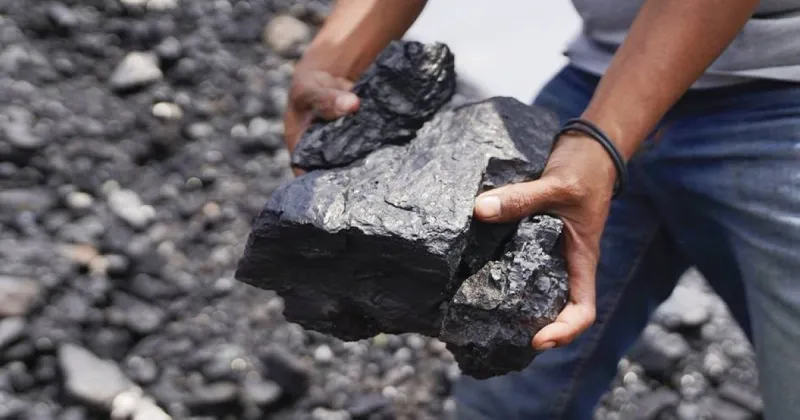
When Newton sat beneath a tree and an apple fell from it, he discovered the law of gravity, which changed the course of science — physics in particular. In much the same way came humanity's discovery of coal: the black treasure whose importance to civilisation evolved from cooking to industry and extended even into art. In the realm of politics, it played a pivotal role in wars, as is always the case when colonial powers deal with the resources of weaker peoples.
The story also features political 'leaders' who emerged from among coal-mine workers, and others who championed calls to regulate the use of a resource that threatens environmental safety, portends the spread of disease, and causes global warming across the entire planet.
The history of coal runs parallel to the history of human civilisation itself. Its discovery began with early humans living in caves, in Europe and Africa alike, where they discovered fire and began gathering dry tree trunks and bringing them inside the cave to warm themselves, their families, and their companions, and to cook the wild animals they had hunted. Then came a night whose exact date is unknown and unrecorded.
After the fire died down, one of them found a tree trunk buried beneath the ash — charred, yet glowing more brightly, burning hotter, and burning cleaner. In this way, purely by accident, humans discovered coal, produced by the burning of wood in a low-oxygen environment — before they even understood what oxygen meant. As human groups transitioned from a nomadic, hunting life to settled communities thanks to agriculture, coal was poised to write important chapters in human history and civilisation.
Palaeontologists say that by 3000 BC, the ancient civilisations of Mesopotamia, Egypt, and the Indus Valley were using coal regularly in daily life — not only for cooking, but also for smelting metals, making pottery, and even in their religious rituals.
They confirm that the ancient Egyptians were among the first peoples to use coal for smelting copper, producing bronze, and making pottery, thanks to its ability to maintain consistently high temperatures and produce durable ceramic vessels.
Then, around 500 BC, both the Greek and Roman empires used coal for cooking. The Greeks in particular developed a distinctive grilling method, using metal skewers and coal fires to cook meat.
The Romans did not stop at imitation; they developed coal use further by building large brick ovens in which bread was baked and meat cooked slowly and in large quantities sufficient for a whole family — ovens that may even have been rented out to other families in exchange for a portion of the bread and meat.
In the 18th century, Europe witnessed the birth of the Industrial Revolution. Demand for fuel surged, and coal was naturally the primary fuel for smelting iron and powering the other industries spawned by that revolution.
But as populations grew and industrial needs intensified, charcoal derived from burning wood was no longer sufficient. Fossil coal — formed from ancient plant remains — came into its own. It was cheaper and more abundant than wood or charcoal, making it an ideal substitute for metal production and for heating homes. Yet charcoal remained the preferred choice for cooking because it produces less smoke and soot.
In the early 20th century, with the arrival of Ford automobiles — made by the famous American carmaker Henry Ford — compressed charcoal briquettes appeared, making charcoal grilling accessible to everyone. In addition to their use in powering cars and other vehicles, they launched America's 'fashion' of outdoor charcoal grilling.
Post-World War II suburban expansion in the United States fuelled growing interest in garden and outdoor cooking. Charcoal briquettes became an essential item for families hosting backyard barbecues, and the Weber Kettle grill — invented in 1952 — became an icon of charcoal grilling using Henry Ford's briquettes.
In the 1960s and 1970s, barbecue culture flourished extensively in regions such as the southern United States, where fully developed grilling traditions took hold — particularly for slow-cooked meats such as brisket and ribs.
China tops the list of the world's largest coal producers, followed by India, Indonesia, the United States, and Australia. China alone produces more than 4.7 billion tonnes — roughly half of total global coal output.
Yet it consumes most of what it produces. India's output exceeds 1 billion tonnes, Indonesia produces around 800 million tonnes, the United States around 470 million tonnes, Australia around 450 million tonnes, and Russia around 420 million tonnes. Indonesia and Australia lead the list of coal-exporting nations.