
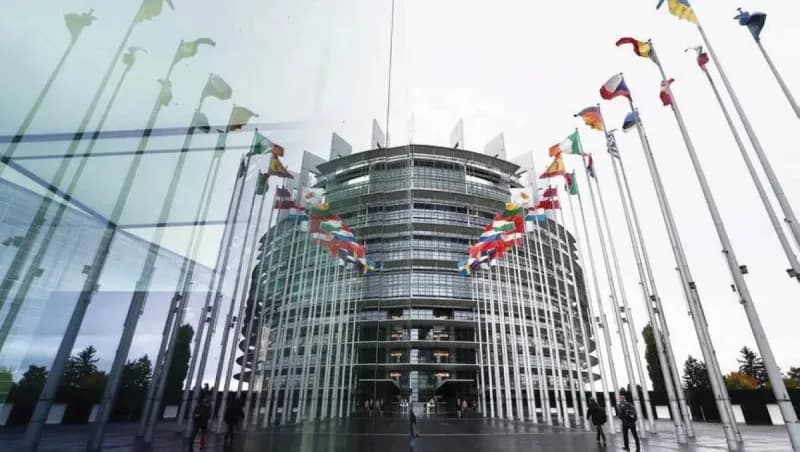
The European Union moved closer to finalising its trade agreement with the United States after the European Parliament approved it by a wide majority, in a step that paves the way for its final adoption on 26 June, days before the deadline set by US President Donald Trump.
The European Parliament voted in favour of the agreement by 440 votes to 151, with 50 members abstaining, bringing to a close a negotiating process that lasted nearly a full year between the two sides.
The agreement includes the elimination of European customs duties on American industrial goods and some agricultural products, in exchange for a tariff cap of no more than 15% on EU exports to the United States — a formula that was considered unbalanced but was reached to avoid a broader trade escalation.
Final ratification by EU member states on 26 June is expected to give the agreement full effect, as both sides seek to ease trade tensions despite ongoing disputes over steel, aluminium, digital rules, and technology.
European officials said the agreement represents "an important milestone" on the path of mutual commitment, while observers considered it grants Europe a temporary truce from Trump's threats to impose additional tariffs on European cars and products.
Despite progress in the ratification process, the trade relationship between the two sides remains vulnerable to volatility, particularly in light of American threats to impose new tariffs on France over technology regulation policies, and the continuing dispute over duties imposed on metals.
The agreement comes after mutual political pressure, with Trump having signalled broader protectionist measures over recent months, while the EU held firm on its own regulatory provisions, before a settlement was reached that includes review mechanisms and a potential suspension of the agreement in the event of a breach after 2029.
Tariffs on steel and aluminium also remain a point of contention between the two sides. The EU objects to the United States imposing tariffs exceeding the 15% cap stipulated in the agreement on hundreds of products containing these two metals.
The bloc included a clause providing for the possibility of suspending some tariff benefits if duties on these products exceed the 15% level after 2026.
Anna Cavazzini, a European legislator leading the trade agreement file for the Greens group, which largely supports the deal, said: "The threats will not stop, because Trump acts in a completely unpredictable manner and appears increasingly desperate day by day." She concluded: "What matters is that the Commission does not make any additional concession beyond what the agreement contains."