
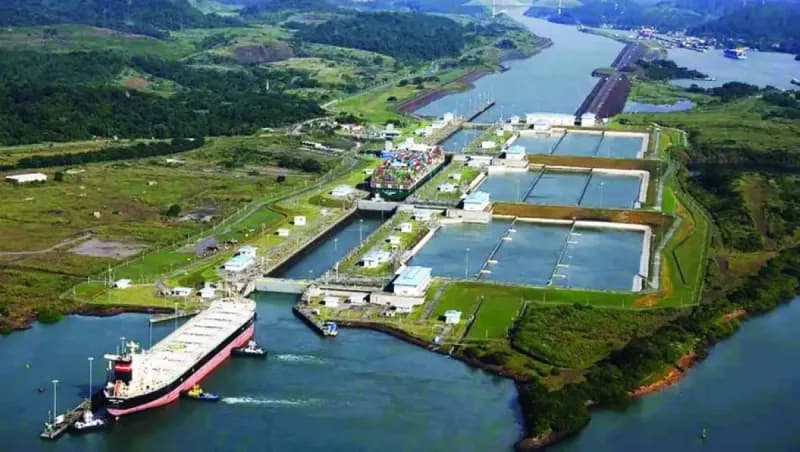
The Panama Canal Authority is intensifying its preparations to deal with severe climate fluctuations linked to the El Niño phenomenon, through a plan aimed at avoiding the shipping restrictions that disrupted vessel traffic through the waterway three years ago.
"We are approaching El Niño this time from a different angle," said Canal Administrator Ricaurte Vásquez Morales in an interview from Washington.
Morales explained that the body overseeing the Central American waterway is reviewing lessons learned from the drought that Panama experienced between 2023 and 2024, with the aim of preparing a plan to handle a potentially longer dry season that could begin in November.
The previous El Niño episode lowered water levels in the freshwater lakes that feed the Panama Canal, forcing the authority to restrict the number of vessels permitted to transit daily — a move that caused navigation bottlenecks and pushed some shipments onto alternative routes.
Officials who typically review draft restrictions in December have begun reassessing the rules governing permissible cargo weights on vessels in anticipation of the expected dry season. Draft refers to the depth to which a vessel sits in the water.
Abundant rainfall over recent months has helped maintain the maximum draft at 50 feet, while most vessels transiting the canal's largest locks — known as New Panamax — draw between 47 and 49.5 feet.
Morales indicated that the authority may impose limited measures by the end of June, including reducing the maximum draft by 1 foot if conditions warrant.
The Panama Canal has experienced sharp climate fluctuations in recent months, following the region's emergence from one of the rainiest dry seasons in seven decades.
The anticipated climate pattern, which could develop into what is known as a "Super El Niño," represents a new test of the canal's operational planning capacity, though estimating its intensity and potential impacts remains a complex task.
"It is extremely difficult to predict how severe it will be," Morales said.