
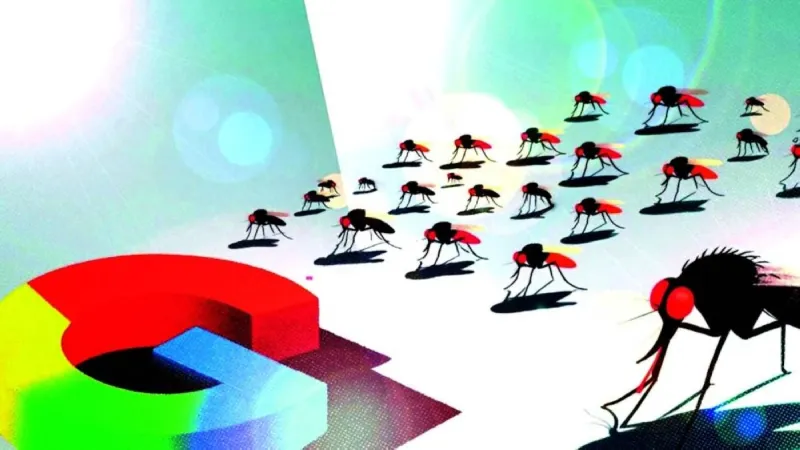
In an unusual move that combines biotechnology and artificial intelligence, Google is working through its research platform Debug to develop an innovative strategy for combating mosquitoes — considered the most dangerous creature on Earth, responsible for the deaths of between 700,000 and 1 million people annually through the diseases they transmit.
The initiative is based on releasing millions of biologically modified male mosquitoes carrying a naturally occurring bacterium known as Wolbachia. When these males mate with female mosquitoes, the resulting eggs are unable to hatch, gradually reducing the numbers of disease-carrying insects and breaking the chain of infection transmission.
According to the company's plans, Google has applied for approval to release up to 32 million modified mosquitoes over two years in the states of California and Florida, relying on artificial intelligence technologies to accurately sort males and ensure that no females are released — as females are responsible for biting humans and transmitting diseases such as malaria, dengue fever, Zika, and yellow fever.
The technology relies on a scientific approach known as the "sterile insect technique," but what is new about the Debug project is the deployment of advanced algorithms and computer vision systems to manage breeding and release operations with high precision, within what the company describes as "automated insect rearing systems."
Preliminary data from previous trials in Singapore indicate that this technology succeeded in reducing populations of the Aedes aegypti mosquito by between 80 and 90%, and in cutting dengue fever cases by more than 70% over a period of between 6 and 12 months.
This direction comes amid growing health challenges linked to climate change and the spread of insect-borne diseases, making this project one of the most unconventional applications of artificial intelligence in the field of global public health.
Linus Upson, chief executive of Debug, said: "When we first launched Debug in Singapore, our goal was to advance mosquito production and release through technology, and to bring Debug to more communities in Asia, where 70% of the global dengue burden lies. Our success in Singapore gives us the confidence to expand."
Although the idea of major technology companies entering laboratories and rearing bacteria-infected mosquitoes may seem strange, Alphabet, Google's parent company, is no stranger to science. Verily Health, the health and artificial intelligence specialist that began as an ambitious project at Google X, was a key driver of the Debug programme for years. Verily, which remained under Alphabet until earlier this year, uses technology and data science to combat disease and other global health problems. In December 2024, Google fully acquired Debug, removing it from Verily's portfolio.