
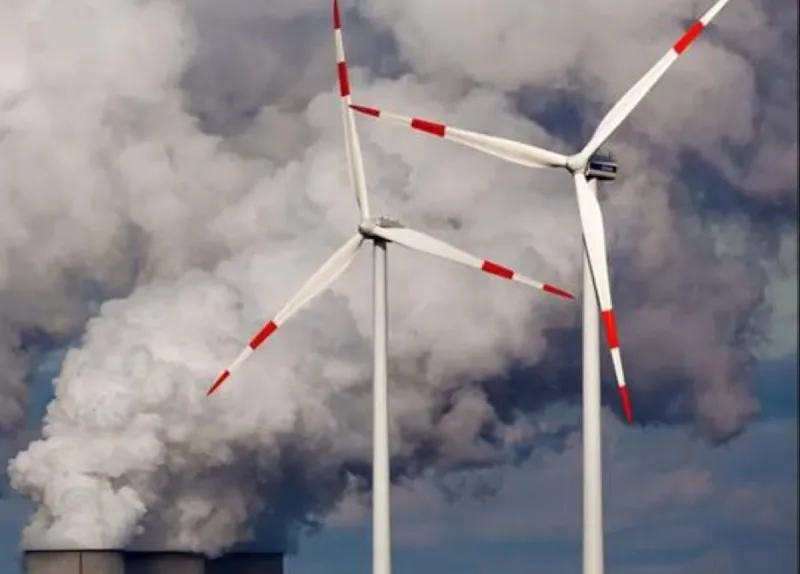
The global energy sector is undergoing a rapid structural transformation, placing sustainable energy sources at the top of the investment priorities of major economic powers and moving away from traditional full dependence on oil and gas. In this context, the International Energy Agency (IEA) confirmed in its comprehensive semi-annual report that global investment directed at solar energy projects, wind power, and green hydrogen technology development has achieved an unprecedented historic leap, surpassing the $2.1 trillion mark.
This massive figure represents a radical shift in the philosophy of global finance: it now equals twice the total capital expenditure directed at oil and gas exploration and hard coal extraction during the first half of this year. This enormous financial flow is attributed to the firm international resolve to reduce carbon emissions and achieve climate neutrality targets, as well as the growing economic viability of green projects, which have become a sustainable solution and a safe alternative to the volatility of fossil fuel prices in global markets — markets affected by ongoing geopolitical disruptions.
Alongside this green investment surge, Europe has succeeded in taking a decisive strategic step to secure its energy needs and guarantee the stability of its domestic markets ahead of the coming winter season. The European Union's Energy Commission stated that underground natural gas storage facilities spread across EU member states have surpassed 88% of their maximum storage capacity — a record achievement that comes four full months ahead of the targeted schedule.
This early fortification of European energy reserves reflects the success of the joint emergency plans adopted by Brussels to reduce the risks of supply shortages. This stability was achieved thanks to the continuous and intensive flows of liquefied natural gas (LNG) shipments, coming primarily from the United States and Qatar, which helped compensate for the absence of traditional pipeline supplies. The results of this achievement were not limited to the security dimension alone; they were immediately reflected in financial terms, as the abundance of supply drove down prices of futures contracts for gas on the Dutch TTF exchange — the principal gas price benchmark in Europe — by 4%, easing pressure on factories and consumers.
The combined indicators from the IEA report and the European Commission's data show that global energy markets are living through a phase of "smart transition." Despite the historic financial injection into clean energy infrastructure, natural gas continues to play the role of "transition fuel" and the critical bridge linking the age of fossil fuels to the age of fully renewable energy. The stability Europe has achieved in its reserves provides it with the temporal and political margin needed to continue building wind farms and solar power stations without falling under the strain of acute energy shortage crises.
Analysts believe that this integration between the expansion of alternative energy and the smart fortification of gas reserves is helping to shape a new concept of national economic security. Securing energy is no longer limited to owning wells and refineries; it has come to mean the ability to diversify sources, possess vast storage capacities, and lead innovation in hydrogen and green technology sectors — sectors that will dominate the global energy landscape in the coming decades.