
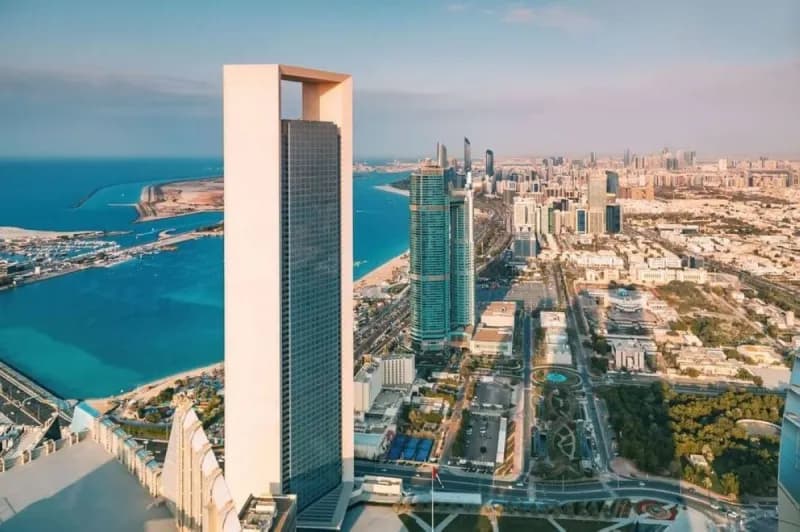
The UAE real estate sector consolidated its status as one of the world's most dynamic and investment-attractive economic sectors during the first half of this year, buoyed by the strength of the national economy, business-friendly government policies, and a continued influx of investors and capital, with expectations of sustained momentum through the second half.
Real estate market indicators showed the UAE remains one of the world's foremost property destinations. Officials and experts told Emirates News Agency (WAM) that the strong performance reflects a market transition to a more mature and sustainable phase after years of rapid growth, underpinned by solid economic fundamentals, according to reports from international consultancies.
A report issued in April by CBRE pointed to the resilience of the UAE's economic foundations, supported by strong financial reserves and a stable sovereign credit rating, with expectations of a robust GDP growth rebound in 2027.
A Knight Frank report also confirmed that Dubai has reinforced its position among the world's foremost destinations for wealth attraction and real estate investment, while the UAE continued to advance among the fastest-growing countries in the number of ultra-high-net-worth individuals.
On the market performance front, the combined value of apartment and villa sales rose by 173.9%, surpassing 84.4 billion dirhams, while transaction volume increased by 103% to reach 16,585 deals compared with the same period last year, according to an analysis by the ADXinteract platform.
In Dubai, a survey by W Capital real estate brokerage showed that market sales exceeded 286 billion dirhams in the first half, recording the second-highest semi-annual sales in the emirate's history after the first half of 2025, which registered 326.6 billion dirhams, based on data from the Dubai Land Department.
Another report by the company revealed that the value of new and announced real estate projects since the beginning of 2026 exceeded 275 billion dirhams, reflecting sustained momentum and the emirate entering the largest semi-annual new real estate project launch cycle in its history.
Farhad Azizi, Chief Executive Officer of Azizi Group, said the real estate sector continued to consolidate its position as one of the most important drivers of the national economy, drawing on genuine housing demand, sustained foreign investment inflows, and a rising proportion of self-financed buyers, all of which reflect market maturity.
He added that the stable economic environment, flexible legislation, and long-term development vision have enhanced the UAE's appeal to capital, predicting continued positive performance in the second half with more sustainable and balanced growth, where competition will favour projects distinguished by planning quality, speed of execution, strategic locations, and long-term investment value, supported by population growth, expanding economic activity, and continued genuine demand for residential units.
He explained that these expectations are based on continued population growth supported by long-term residency programmes, the ongoing implementation of the Dubai Economic Agenda D33, and the expansion of infrastructure projects, particularly in Dubai South and the area surrounding Al Maktoum International Airport, in addition to an anticipated improvement in mortgage financing solutions, which will bolster developer and investor confidence in the coming years.
Hussein Salem, Chief Executive Officer of Ohana Development, said the market has entered a more mature phase in which growth is now driven by long-term demand, noting that Abu Dhabi and Dubai have continued to record historic highs in real estate transactions, reflecting market strength and its capacity to attract both domestic and international investment.
He anticipated continued positive performance in the second half at a more balanced pace, with sustained demand for well-planned residential communities, branded projects, and waterfront developments, alongside the entry of new supply that will create a healthy balance between supply and demand.
He affirmed that market strength rests on structural factors including population growth, continued foreign investment inflows, long-term residency programmes, government investment in infrastructure, economic diversification, and the expansion of real estate financing, all of which reinforce market stability and give an advantage to well-planned, high-quality projects.
Thomas Wan, founder and Chief Executive Officer of Refine, said the UAE real estate sector continues to demonstrate high levels of resilience, noting that demand remains strong but buyers have become more focused on project quality, location, developer reputation, and the living experience, reflecting heightened awareness and market maturity.
He affirmed that developer success in the coming phase will depend on delivering projects that meet genuine market needs, adopting well-considered pricing strategies, and enhancing competitiveness amid continued growth in supply.
Syed Mahrooz, Chief Executive Officer and Chief Financial Officer of Albaago Group, said the real estate sector is maintaining its strong performance throughout 2026, preserving its standing among the world's most attractive property markets, thanks to high demand, the success of the long-term development vision, continued economic diversification, a growing number of high-net-worth individuals, advanced residency and investment policies, and continuous infrastructure expansion, all of which have reinforced the country's position as a destination for long-term investment and residency for individuals and companies alike.
He added that the market is poised to sustain its activity for the remainder of the year, with continued demand for upscale residential communities, branded projects, waterfront destinations, and high-quality commercial assets, amid growing investor interest in long-term value, quality of life, and asset sustainability.