
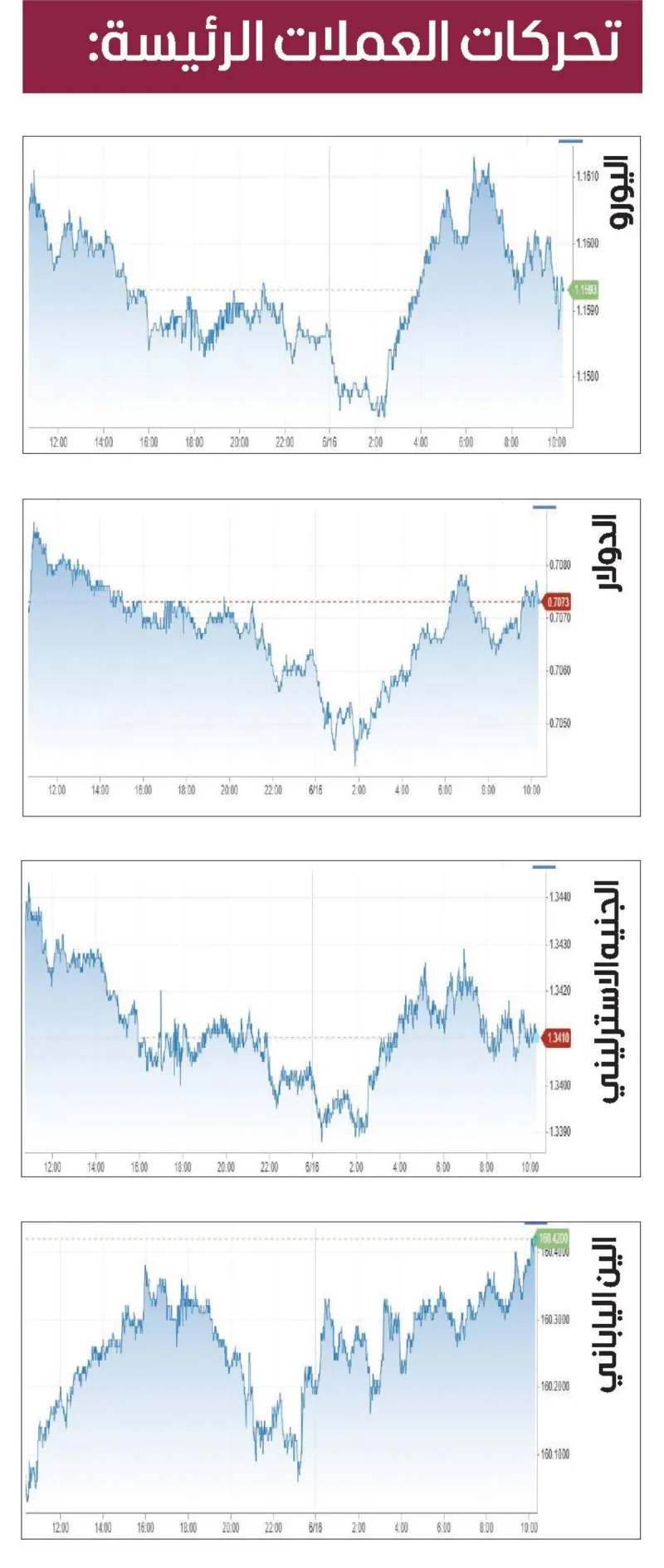
The dollar stabilised on Tuesday near its lowest level in ten days, as an agreement to end the Iran war boosted risk appetite, while the yen hovered around the 160-per-dollar level after the Bank of Japan raised interest rates in a widely expected move aimed at curbing inflation risks stemming from the conflict.
Investor attention this week is focused on a series of central bank meetings, including those of the Bank of England and the Federal Reserve, scheduled for the coming days to assess whether the end of the conflict came too late to ease near-term inflation concerns.
The Bank of Japan raised interest rates on Tuesday to their highest level in 31 years, as widely expected, causing little surprise in the markets. However, market analysts noted that the vote result came in at 7 to 1, suggesting some uncertainty over the timing of the next increase.
The yen steadied at 160.23 per dollar, keeping traders wary of another round of intervention by the Japanese government, as the Middle East agreement is unlikely to provide relief for the beleaguered currency.
The Australian dollar fell 0.3% to $0.705 after the Reserve Bank of Australia held interest rates unchanged in a unanimous decision, following three consecutive hikes, even as inflation continued to rise.
The euro stabilised at $1.159, just below its ten-day high of $1.1622 reached on Monday, while sterling was last trading at $1.3413 on Tuesday.
The dollar index, which measures the US currency's performance against six other currencies, stood at 99.66. The index has risen 2% since the conflict first erupted in late February, in a volatile reaction to the fragile ceasefire and regular exchanges of attacks.