
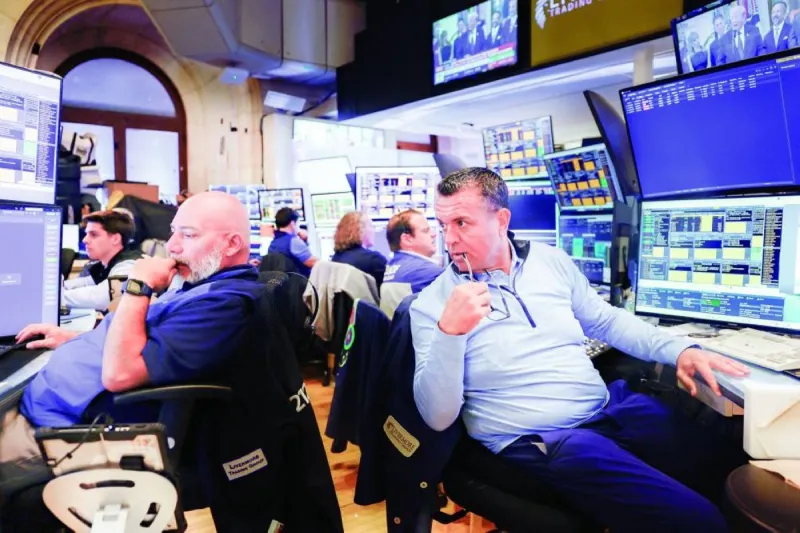
Global markets maintained their footing on Thursday, with modest gains in equities and stability in currency and bond markets, as investors attempted to balance escalating tensions in the Middle East against continued strength in the technology sector and supportive economic data.
Oil prices fluctuated amid renewed military confrontation in the region, with Brent crude futures falling 0.62% to around $77.54 per barrel after touching $79, while West Texas Intermediate dropped 0.92% to $72.84.
United States: Chipmakers support Wall Street
US stocks opened higher, driven by a rebound in semiconductor companies, despite concerns over the fallout from geopolitical escalation.
The Dow Jones rose 0.39% to 52,523 points, the S&P 500 gained 0.83% to 7,531 points, and the Nasdaq jumped 1.24% to 26,196 points.
The technology sector led gains, with the Philadelphia Semiconductor Index climbing 4.6%, boosted by a 7.5% surge in Micron Technology's share price after the company announced an investment plan of more than $250 billion in the United States through 2035 to meet surging demand for AI chips.
Applied Materials rose 7% and ON Semiconductor gained 9.3%, while the technology sector within the S&P 500 advanced 1.5%.
In contrast, Meta fell 1% amid reports that it is moving to manufacture its own AI chips, while IBM and Microsoft declined by around 2% and 0.8% respectively.
On the economic front, labour market data showed US jobless claims falling to 215,000, reflecting continued labour market resilience. Investors are watching for signals from the Federal Reserve on interest rates, with markets pricing in a possible 25 basis point hike before year-end.
Europe: Technology leads the advance
European equities rose, with the Stoxx 600 gaining 0.78%, supported by gains in the technology sector, which climbed 2.6%.
Sentiment was bolstered by reports suggesting Chinese AI companies may be granted limited access to Nvidia H200 chips, as well as the successful $28 billion offering by South Korea's SK Hynix, amid expectations of growing global demand for AI infrastructure.
Japan: Nikkei rises on chip sector strength
Japan's Nikkei index ended Thursday's session up 1.38% at 67,743 points, after three consecutive days of losses, while the Topix rose 0.4% to 4,020 points.
Semiconductor companies led the gains, with Kioxia up 8.3%, Advantest rising 5.9%, and Tokyo Electron advancing 5.5%.
The rally was supported by strength in the US technology sector, a chip supply agreement between Broadcom and Apple valued at more than $30 billion, and indications of expanded use of Nvidia chips in China.
However, rising oil prices capped gains, as Japan's air transport sector fell 2.2% and transport equipment stocks declined 1.9%, while the yield on Japan's 10-year government bond climbed to its highest level in 30 years on inflation concerns.
Currencies and gold: Relative calm as rate watchers wait
Currency markets were largely stable, with the dollar holding steady and the yen remaining near four-decade lows, while the euro and sterling posted limited moves.
Gold rose 1.41% to $4,133.62 per ounce, benefiting from continued safe-haven demand, while bond markets remained sensitive to oil price movements and inflation expectations.
Current market movements reflect a continuing equilibrium between AI-driven growth drivers and the risks posed by geopolitics and energy prices, as investors await the trajectory of monetary policy in the period ahead.