
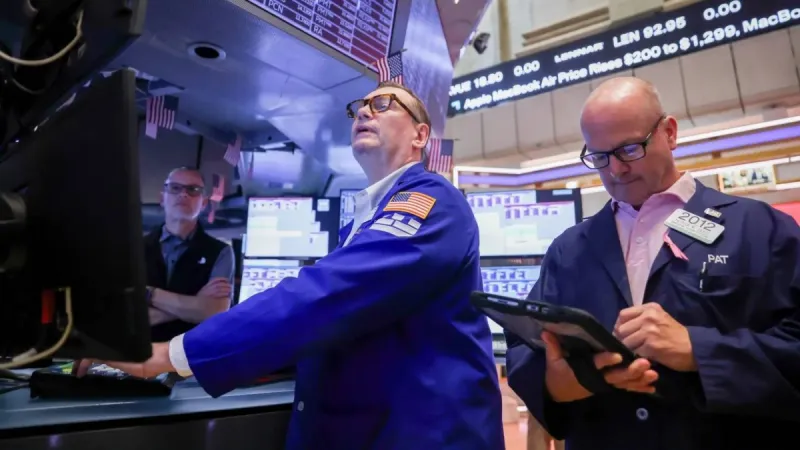
Global financial markets are witnessing one of the strongest quarterly performances in years, as investor appetite for risk persists despite escalating geopolitical tensions between the United States and Iran and sharp swings in energy prices and currencies. Trading data indicate that American and global indices are on course to close the second quarter with strong gains, reflecting a broad shift in investment sentiment towards high-growth equities and the technology sector, particularly artificial intelligence.
Market movements during the quarter reflect a sweeping repositioning of global capital, with American and Asian equities leading growth, while traditional safe-haven assets such as gold and the yen retreat under the influence of a stronger dollar and falling energy prices.
Despite the persistence of geopolitical risks, markets appear so far more inclined to price in growth and technology at the expense of concerns, signalling a new phase in the global economic cycle — one driven by data rather than shocks.
Best quarter since 2020
At the global level, the MSCI World equity index rose approximately 14% during the quarter, its best performance since 2020, driven by strong gains in Asian and American markets. The European STOXX 600 also posted gains of nearly 10%, supported by the technology, energy, and defence sectors, amid a relative improvement in investor sentiment.
US equities
In the United States, Wall Street continued to register record levels of momentum, with the Dow Jones rising 0.35%, the S&P 500 advancing 0.71%, and the Nasdaq gaining 1.53%. These moves put the major indices on track for their best quarterly performance since 2020, as investment flows into growth stocks persist despite concerns over inflation and monetary policy.
Analysts at Bank of America assert that cyclical sectors — led by energy and financial services — could gain additional momentum in the second half of the year, as investors reassess interest-rate and inflation cycles and the likelihood of continued monetary tightening by the Federal Reserve.
David, chief market analyst at Trade Nation, said: