
For the first time in four years, earnings at companies listed in emerging markets have exceeded analyst expectations, in a strong signal that the rally these markets are experiencing may still be only in its early stages, according to data compiled by Bloomberg.
The data showed that companies listed in the MSCI Emerging Markets Index recorded average annual earnings that surpassed estimates made a full year ago, for the first time since April 2022. The index's weighted average earnings per share over the 12 months ending in May reached 95.1 points, surpassing the consensus analyst estimate of 94.6 points.
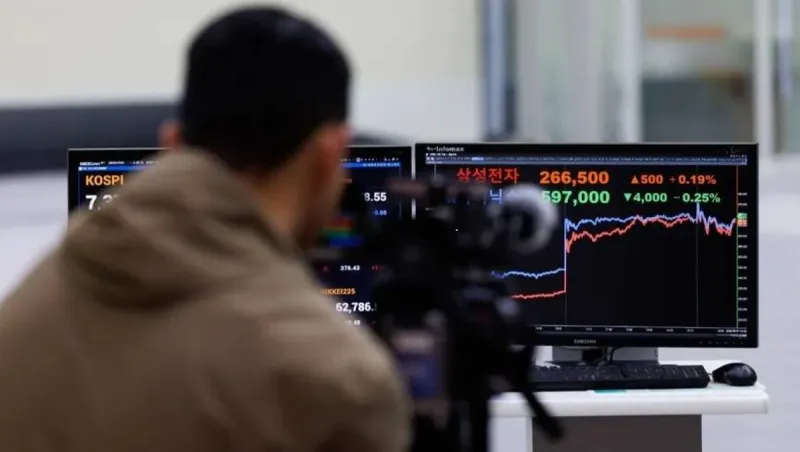
Asian technology companies are clearly leading this strong performance. South Korea's SK Hynix posted first-quarter earnings that beat expectations by 43%, while Samsung Electronics surpassed estimates by 16% and Taiwan Semiconductor's results exceeded expectations by 5.7%. In other sectors, India's Indian Oil delivered an earnings surprise of 33%, while Brazilian power company Eneva posted results that beat estimates by 44%.
With emerging market equities up roughly 30% since the start of the year, analysts say the strength of earnings growth confirms that these gains are built on genuine fundamental factors rather than a passing speculative wave. Archie Hart of Ninety One UK said the market is now finally being supported by fundamentals rather than simply being driven by expectations alone.
Hart notes that technology companies in emerging markets still trade at significant discounts relative to their American counterparts despite faster earnings growth. While the US semiconductor equipment index trades at more than 46 times forward earnings, the emerging markets information technology index stands at just 12.3 times, leaving room for further upward repricing.
Hart believes that improving earnings could prompt asset managers to increase their allocations to emerging markets, noting that shifting just 5% of investment weight away from US equities would be enough to increase emerging market allocations by roughly 30%, given the large difference in the size of the two markets.
Energy sectors began beating earnings expectations this quarter, followed by financial companies that started their recovery toward the end of 2025, while staples and industrial companies are posting results close to estimates. By contrast, consumer discretionary, healthcare, real estate, and utilities sectors remain the weakest performers within the index.
Jitania Kandhari of Morgan Stanley Investment Management warned that the dominance of artificial intelligence stocks raises concerns about concentration risk, as Asian companies are outperforming the rest of the emerging market universe by a wide margin. Ashish Chugh of Loomis Sayles affirmed that most earnings per share growth will continue to be concentrated within the technology sector specifically.
Investors believe that China's gradual emergence from its deflationary spiral opens the door to a broader industrial recovery, particularly as the pace of new share issuances slows and buybacks rise — factors that contribute to boosting earnings per share after years in which heavy share issuance weighed on earnings growth by as much as 6 percentage points, according to Hart.
JP Morgan Asset Management expects a broader recovery. Anuj Arora, the firm's head of emerging market equity investments, sees China's economic recovery and accelerating inflation supporting industrial, defence, and commodities sectors. He added that the continued weakness of the dollar, government spending, and large-scale investment in artificial intelligence and infrastructure will sustain the momentum of emerging markets in the period ahead.