
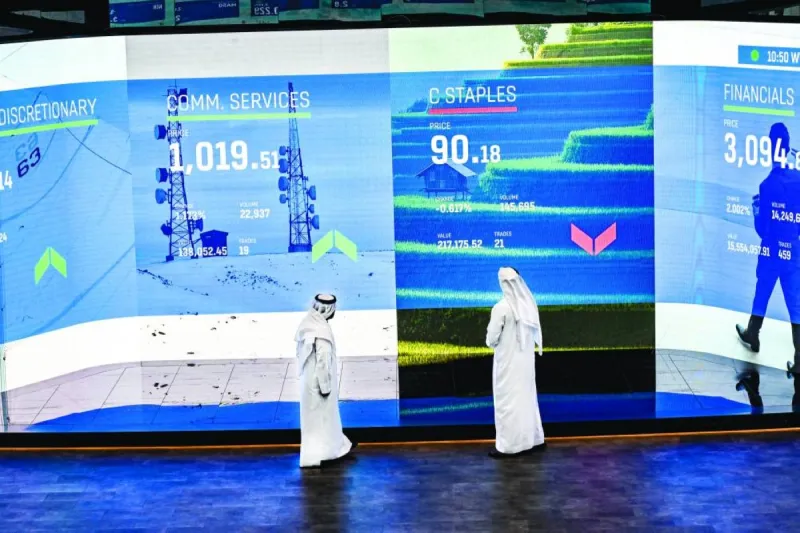
Local financial markets are anticipating a more optimistic week in terms of geopolitical developments in the Middle East, which weighed on performance last week, as investors look to the markets hoping they can regain upward momentum.
The Dubai Financial Market index came under moderate selling pressure last week, affected by the caution that prevailed across most Gulf markets as a result of regional geopolitical developments. Leading stocks, particularly in real estate and banking, were also affected by profit-taking following the gains they had achieved in previous periods.
Despite these pressures, the market's general index held firm above important technical support levels, reflecting continued investor confidence in the emirate's economic fundamentals. Available data indicate that the Dubai index has maintained a large portion of its annual gains despite the recent pullbacks.
Shares of major real estate companies were the main driver of trading activity, as investors continued to monitor indicators of Dubai's real estate sector and the impact of regional tensions on purchase and investment decisions, while major banks continued to provide a degree of support to the market on the strength of their financial results.
The Abu Dhabi Securities Exchange recorded a stable performance but ended the week with a limited decline of approximately 0.9% according to the latest weekly data, with the index settling near the 9,614-point level.
This performance reflects the continuation of limited selling pressure on some leading stocks, particularly in the banking, energy, and investment sectors, despite the continued flow of positive news regarding the expanded participation of global financial institutions in the market.
Sectoral diversification in the Abu Dhabi market helped limit the severity of the declines, as the market benefits from a broad base of large companies operating in the energy, industry, financial services, and telecommunications sectors, making it less sensitive to short-term fluctuations compared to some other markets in the region.
Geopolitical developments remain the most influential factor on investor sentiment in the coming week, as concerns linked to regional tensions caused most Gulf markets to retreat last week.
This was also reflected in the UAE markets. Should signs of de-escalation emerge in the coming days, markets could see a swift positive rebound as investor risk appetite returns.
Oil prices continue to play an important role in supporting investor sentiment across the Gulf region. Despite recent volatility, current oil levels remain relatively high compared to historical averages, supporting government spending and economic activity in the UAE and Gulf states in general.
Oil stability above elevated levels is expected to be a particularly supportive factor for the Abu Dhabi market, given the weight of energy-related companies within the index.
Despite external challenges, UAE economic indicators continue to show notable resilience, with the economy benefiting from diversified sources of growth and rising foreign direct investment.
Major projects in the tourism, real estate, and infrastructure sectors continue to advance. The ongoing expansion of global financial institutions' presence in UAE markets further bolsters international investor confidence and limits the impact of temporary negative factors.
The Dubai market enters next week's trading in an important testing zone between buying and selling forces. If the index manages to hold current support levels, a gradual rebound targeting a recovery of part of last week's decline may materialise, particularly given the possibility of investment liquidity returning to banking and real estate stocks. However, if the market faces additional external pressures, it could move within a sideways range with a negative bias during the first sessions of the week.
Overall, the most likely scenario appears to be volatile trading with a limited positive bias in the absence of any sudden geopolitical developments.
The Abu Dhabi market also enters the week with a balanced performance, and the index is expected to hold firm above the 9,500-point level, with the potential for gains if investor sentiment improves globally and regionally.
Continued interest from foreign institutions in the market may also help support liquidity and reduce the severity of potential pullbacks. The banking sector remains the top candidate to lead activity in the coming week, given the strong financial positions of UAE banks and their continued delivery of solid profits.