
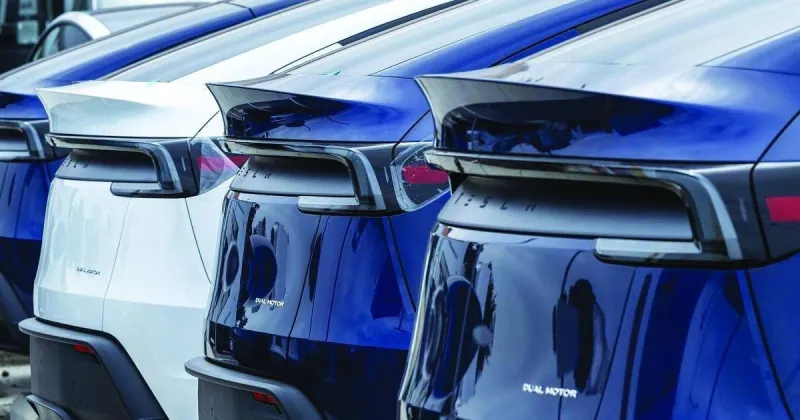
Tesla deliveries rose 25% year on year in the second quarter of this year, surpassing analyst expectations, in a sign that sales momentum is recovering amid intensifying competition in the electric vehicle market.
Total vehicle deliveries in the second quarter reached 480,126 units, while total production came in at 451,758 units.
The company's deliveries exceeded analyst forecasts of approximately 406,600 vehicles, according to the StreetAccount consensus estimate, while the average estimate compiled by Tesla last week stood at 406,024 vehicles.
By comparison, Tesla recorded deliveries of approximately 384,000 vehicles in the same period last year, while deliveries totalled 358,023 vehicles in the first quarter of 2026.
The company did not disclose delivery details by region or model, but noted that the Model 3 and Model Y accounted for 467,762 vehicles of total deliveries.
Deliveries are considered the closest proxy to actual sales, though they do not constitute a precise definition of sales according to the company's disclosures to shareholders.
Tesla is attempting to regain sales momentum after deliveries declined year on year for two consecutive years — a trend attributed in part to waning consumer enthusiasm for the company due to controversy surrounding Elon Musk, as well as the expiry of the US federal tax credit for electric vehicle buyers.
Musk's controversial political positions, his support for certain far-right, anti-immigration movements in Europe, and his role in the administration of US President Donald Trump in reducing the size of the federal workforce have also deterred some potential buyers from purchasing Tesla vehicles.
At the same time, the company faces growing competition from Chinese electric vehicle manufacturers such as BYD, NIO, and Xiaomi, which have introduced lower-cost and more technologically advanced cars, as well as competition from South Korea's Hyundai Motor Group and European companies including Volkswagen.
In January, Tesla announced the suspension of production of its Model S and Model X, with the dedicated production lines at its Fremont factory in California to be repurposed for manufacturing Optimus robots.