
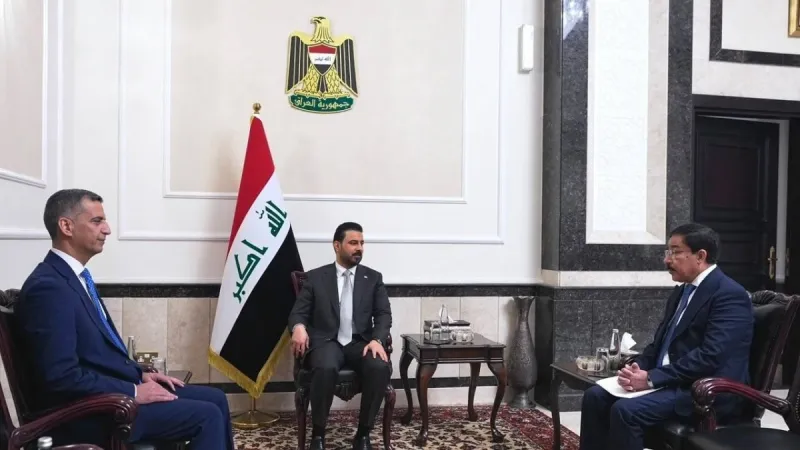
Nizar Nasser Hussein has assumed the role of governor of the Central Bank of Iraq, succeeding Ali Mohsen Al Alaq, in a move that comes at a sensitive time as the Iraqi economy faces growing financial pressures and rising speculation about the future of the dinar's exchange rate.
The handover ceremony was held under the auspices of Prime Minister Ali Faleh Al Zaidi, who appointed the outgoing governor Al Alaq as an adviser for economic affairs, according to a government statement. The change comes days after reports of Al Alaq's dismissal from the post, amid a build-up of economic challenges.
Hussein's appointment — he previously served as director of the anti-money laundering and counter-terrorism financing office at the central bank — is seen as a signal of Baghdad's intent to tighten financial oversight, particularly following Iraq's recent placement on the Financial Action Task Force (FATF) grey list.
The appointment comes against a backdrop of mounting economic pressures stemming from declining oil exports, growing concerns linked to money laundering and terrorism financing files, and the government's drive to bolster financial stability and attract investment.
Meanwhile, speculation is intensifying over a possible adjustment to the Iraqi dinar's exchange rate, amid rising demand for the dollar on the parallel market, even as the central bank has affirmed it has no intention of changing the official rate.
The dollar on the unofficial market has risen to levels ranging between 1,550 and 1,560 dinars, compared with the official rate of 1,310 dinars, reflecting a widening gap between the official and parallel markets.
The central bank last week denied reports of an imminent exchange rate adjustment, warning against the circulation of misleading information, yet pressure on the local currency persists amid the financial and economic challenges facing the country.