
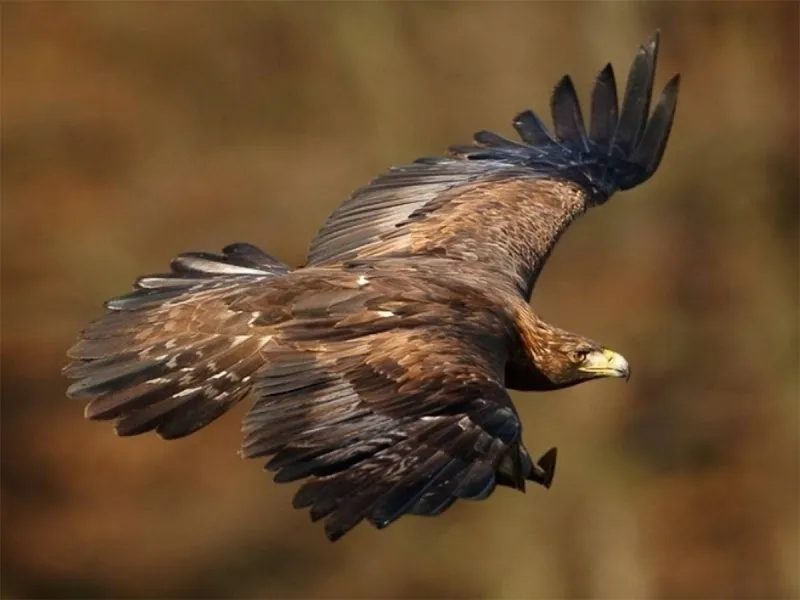
The colour of feathers may appear to be nothing more than an aesthetic trait that gives birds their distinctive appearance, but a new scientific study has revealed that colour can also affect feather weight — which may in turn influence the amount of energy some birds need during flight.
It begins with a seemingly familiar question: which is heavier, a kilogram of feathers or a kilogram of steel? Although the answer is that both weigh the same, the surprise lies in the fact that feathers themselves do not always weigh the same amount — their weight can vary according to colour.
Birds obtain the colours of their feathers from pigments deposited within the feather's keratin structure. The most prominent of these is melanin, a compound that gives feathers shades of black, brown, and grey, alongside other pigments such as carotenoids, which are responsible for yellow, orange, and red colours.
To determine how much these pigments contribute to feather weight, researchers in Spain conducted a study covering 109 samples from 19 bird species, including the golden eagle, the red-legged partridge, and the spotted flycatcher. The researchers extracted melanin from the feathers using precise chemical processes, then measured its mass and compared it with the original weight of the feathers.
The results showed that melanin accounts for an average of around 25% of the dry mass of feathers, while its proportion exceeded 60% in the feathers of some very dark crow species.
The study, published in the journal Biology Letters, also revealed that the two types of melanin do not carry the same weight: eumelanin, which is responsible for dark colours, is heavier than phaeomelanin, which gives feathers shades of light brown and orange. This means that dark feathers carry greater mass than light-coloured feathers.
The researchers suggest that this difference may cause darker birds to consume more energy during flight, which could explain the tendency of many migratory birds to have light-coloured plumage containing smaller quantities of eumelanin. Nevertheless, the scientists stress that this hypothesis still requires further study.
The study also proposed that white-feathered birds, which lack melanin pigment, may invest the energy they save into producing denser plumage, affording them better thermal insulation. This could explain the prevalence of white feathers among some birds that inhabit polar environments, such as the snowy owl.
Although feathers account for only around 6.3% of a bird's body weight, scientists are still studying the threshold at which increased feather weight can affect flight efficiency. The study concludes that feather colours are not merely an aesthetic element, but part of a delicate balance between appearance, weight, and flight efficiency.