
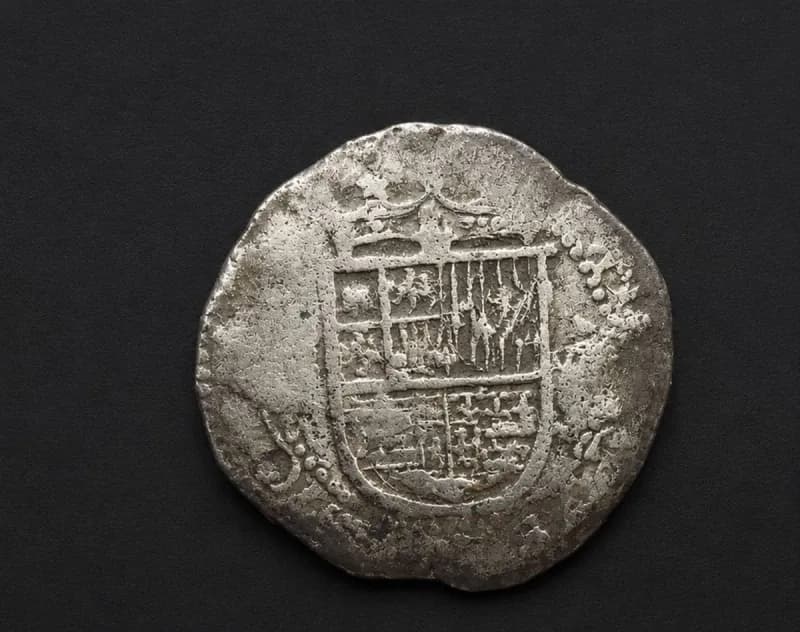
Archaeologists have succeeded in solving one of the oldest historical mysteries in South America, after a small silver coin more than 400 years old led them to pinpoint the exact location of a Spanish colony that has been lost since the 16th century, known as the City of King Don Felipe.
The coin, a "piece of eight" (real de a ocho), was found buried beneath the foundations of a church near the Strait of Magellan in southern Chile, during excavations led by a team of researchers from Bernardo O'Higgins University in collaboration with Chile's National Research and Development Agency.
The colony was founded in 1584, when Spain attempted to establish a permanent foothold to control the Strait of Magellan, one of the most important maritime passages in the world at the time. The venture ended in human catastrophe, however, as most of the settlers perished from famine, disease, and the harshness of the climate — leaving the site to be known thereafter as the "Port of Famine."
Researchers confirmed that the coin bears the seal of Spanish King Philip II and was placed on one of the church's foundation stones, consistent with historical accounts describing the religious ceremonies that accompanied the founding of the city.
Historian Soledad González Díaz said the discovery represents a rare convergence of archaeological evidence and written historical sources, noting that it not only confirms the location of the church but also helps redraw the settlement's layout and shed light on its urban organisation.
Modern technology leads to the discovery
Before beginning excavations, the research team employed non-invasive survey methods to narrow the search area and minimise disturbance to the archaeological site. The scientists used metal detectors and geolocation technologies to detect promising signals beneath the surface, enabling them to identify sites worthy of targeted digging.
Archaeologist Francisco Garrido said the team initially detected a strong signal but was unable to determine its nature until targeted excavations were carried out, at which point the findings revealed the remains of the historic church.
Garrido explained that the significance of the discovery is not limited to uncovering a single building; rather, it represents a key to redrawing the layout of the entire settlement, as identifying the location of the church makes it possible to infer the positions of other structures and understand the urban organisation upon which the city was built more than four centuries ago.