
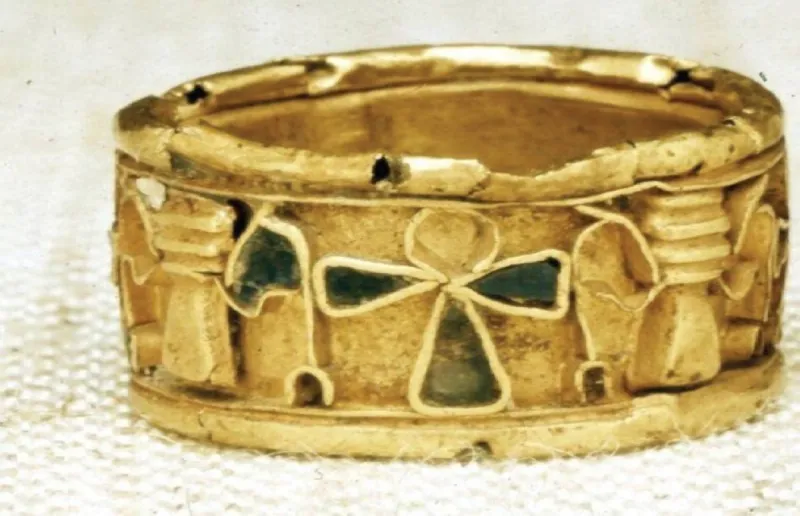
Russian archaeologists have unearthed a bronze ring from the Ptolemaic era during excavations in the Russian Black Sea city of Anapa. The ring is estimated to be more than 2,200 years old, in a unique discovery that sheds light on the trade and cultural ties between the northern Black Sea region and Alexandria during the Hellenistic period.
The RT website reported that the ring was discovered during excavations at an archaeological site known as the "Voskresensky-6 Property Complex", located approximately 500 metres from Anapa's railway station.
Vessels dating to the Hellenistic era were also found at the same site. The ring bears a clear engraving of a woman's head in profile, and experts have identified her as Egyptian Queen Arsinoe III, who ruled Egypt between 220 and 204 BC. The discovered ring is of particular significance because the engraving of Arsinoe III is believed to have been made during her reign.
The chronology of the collection of artefacts uncovered at the site — including amphorae, jugs, and decorated cups — also corresponds to her reign, which is considered rare in archaeology. These rings, known to specialists as "Ptolemaic rings", were widespread in the northern Black Sea region during the second half of the third and second centuries BC.