
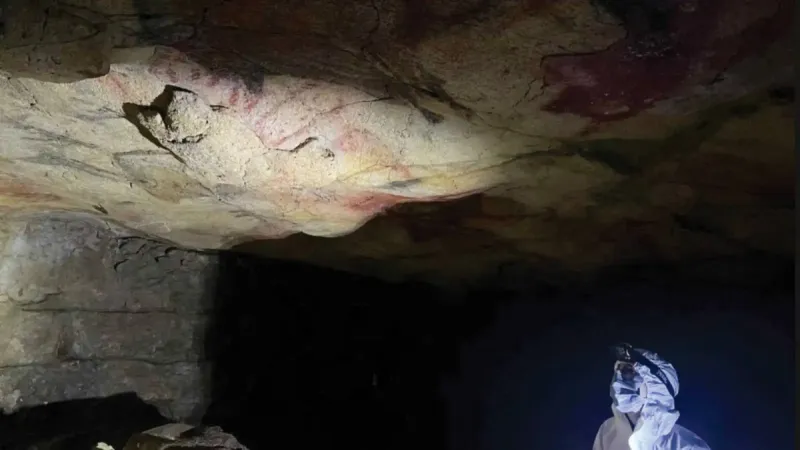
An international team of ancient genetics scientists has, for the first time in history, succeeded in extracting human DNA from cave walls and from the remains of rock art dating back tens of thousands of years.
This scientific achievement, published in the journal Nature Communications, represents an unprecedented breakthrough proving that cave walls are capable of preserving human genetic material — ending decades during which scientists relied exclusively on extracting DNA from bones and soil surrounding archaeological remains, according to the Eram website.
The researchers collected 54 samples from 24 wall panels inside 11 caves in Spain and Portugal. Scientists succeeded in detecting human DNA in 5 of the samples, one of which came from a red dot painted in the Escoural Cave in Portugal, attributed to Homo sapiens who lived at least 4,000 to 5,000 years ago. Additional samples were also found in the Cueva de Cufurón in Spain.