
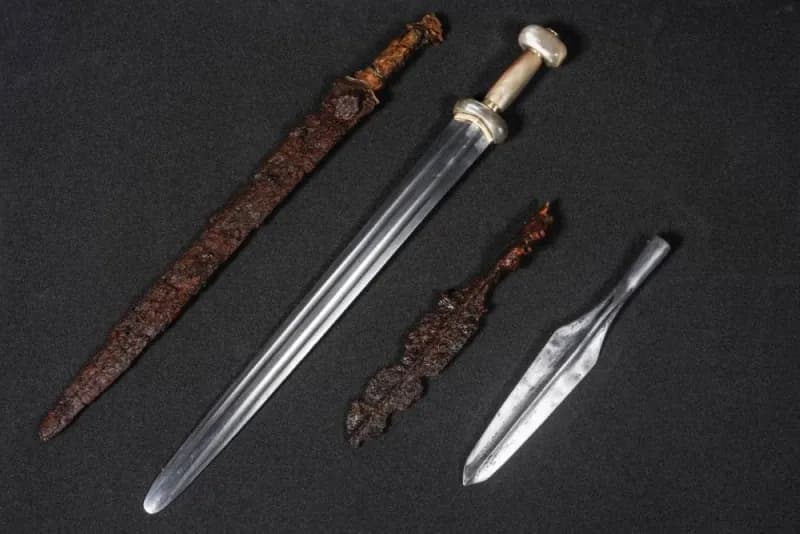
A rare collection of archaeological treasures discovered alongside the remains of a young Iron Age warrior buried some 2,000 years ago in Scotland is being put on public display for the first time, according to The Independent.
The young man, believed to have been between 17 and 25 years old at the time of his death, is thought to have been buried between 10 and 70 AD in a stone grave in the city of Alloa, during a period marked by rising tensions as the Roman Empire expanded northward into Britain.
The burial items included an iron sword in a leather scabbard placed carefully on his chest, alongside a spear, a bronze cloak pin, a necklace of glass beads, and bronze and iron rings believed to have formed part of a belt.
Also found were two bronze toe rings, regarded as an indicator of the high social status he enjoyed during that era. Experts suggest that the presence of weapons in the grave may reflect his role as a warrior during his lifetime, or the image his community wished to preserve of him after death.
Iron Age burials of this kind are rare in Scotland, particularly those containing weapons. Archaeologist Susan Mills discovered the items in 2003 during routine excavation work, after which they underwent years of research and restoration.
The finds are set to be the centrepiece of the exhibition "Scotland's Early Warriors", which opens this week at the National Museum of Scotland and runs until 16 May next year.