
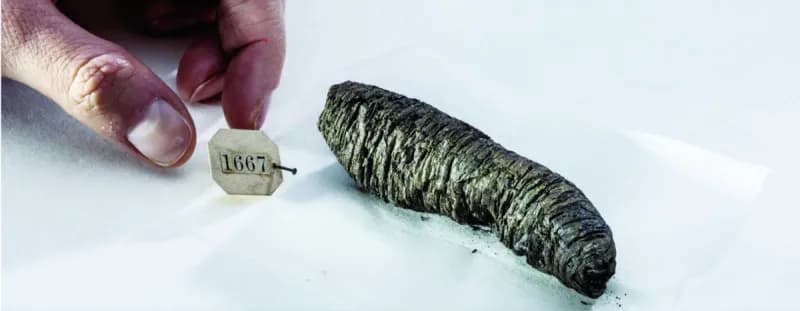
There are no limits to the new frontiers that artificial intelligence opens up, day after day, across every field. The latest proof of this has emerged in archaeology, where researchers using particle accelerators and artificial intelligence have succeeded in virtually "unrolling" and reading the Herculaneum papyrus scrolls for the first time since the eruption of Mount Vesuvius in 79 AD buried them under 60 feet of ash and rock.
According to Erm News, the scrolls — recovered from the only library to survive from the Greco-Roman era, housed in the Villa of the Papyri — were so fragile that earlier attempts to open them physically destroyed large portions of them.
Papyrologist Federica Nicolardi led a team of historians and artificial intelligence experts to decipher the scrolls. The efforts yielded remarkable results, most notably the extraction of texts from the smallest scroll in the collection, whose ideas align with the Stoic school of philosophy.