
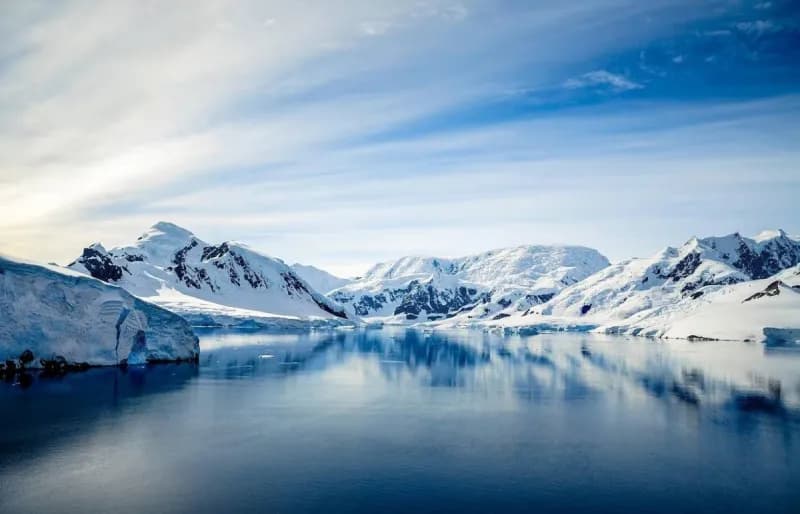
Scientists have recently warned of the danger of imminent disasters caused by the enormous losses suffered by the frozen continent, as the sea to its west remains ice-free following record heatwaves that struck the region in early June.
Satellite images show that the Bellingshausen Sea, located west of the Antarctic Peninsula, which had been ice-covered until June — the start of winter in the southern hemisphere — is now completely free of ice.
According to Russia Today, experts estimate that approximately 650,000 square kilometres of sea ice are missing compared with the average for the period from 1991 to 2020, and that 3 of the past 4 years have seen a decline in sea ice cover in this region, which may mean the ice there will never return.
The area of sea ice around the entire continent on 10 June 2026 stood at approximately 11.4 million square kilometres, far below the long-term average, which will affect the environmental balance of the Earth as a whole.
Scientists noted that these changes could be critical for the ecosystem, as ice normally provides shelter for krill — microscopic crustaceans that form the foundation of the ocean food chain — and the retreat of ice significantly affects the lives of penguins and seals.